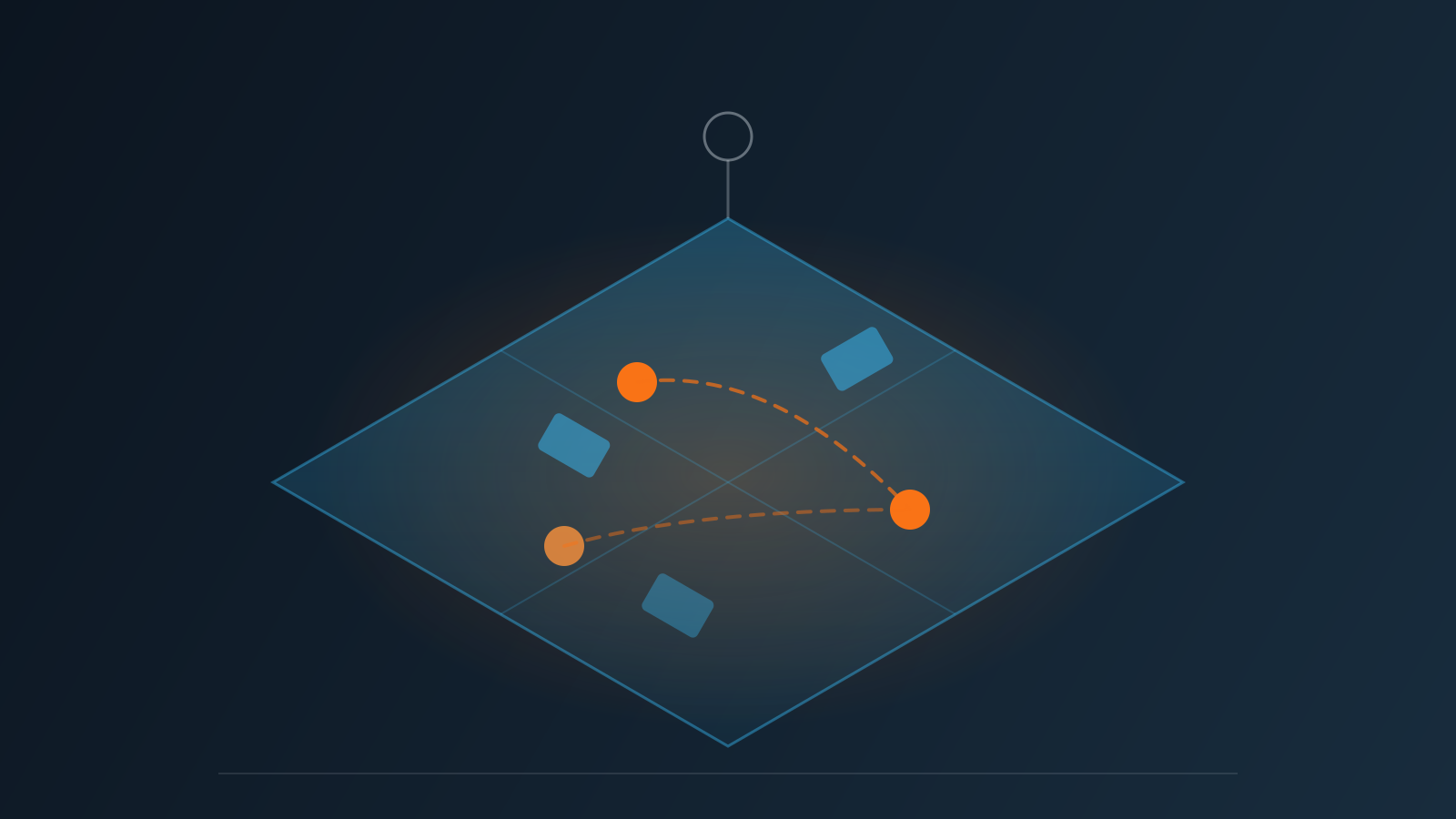
On August 4, Yusen Logistics Americas announced a collaboration with Destro AI on a physical AI platform for warehouse operations. The system continuously analyzes conditions on the floor and optimizes work assignments across both employees and autonomous mobile robots. The initial deployment targets cart movement inside Yusen's transload operations, with pallet movement and AI-powered workflow verification named as later phases.
What makes this worth flagging is the unit of optimization. Most warehouse AI announcements optimize a machine — a faster arm, a denser storage cube, a better route for one AMR. This one optimizes the assignment, across a mixed fleet of people and robots, which is where the hours in a building actually go. A picker waiting for a robot that was dispatched to the wrong aisle is a coordination loss, not an equipment loss, and no amount of hardware fixes it.
Starting in transload is also a deliberate choice. Transload is short-dwell, high-touch and unforgiving: freight arrives, gets reconfigured and leaves, so a coordination mistake shows up within the shift rather than a week later in a service-level report. It is a good place to find out quickly whether an assignment engine is actually better than the supervisor it replaces — and a good place for any operator to test the same question against their own records before buying one.