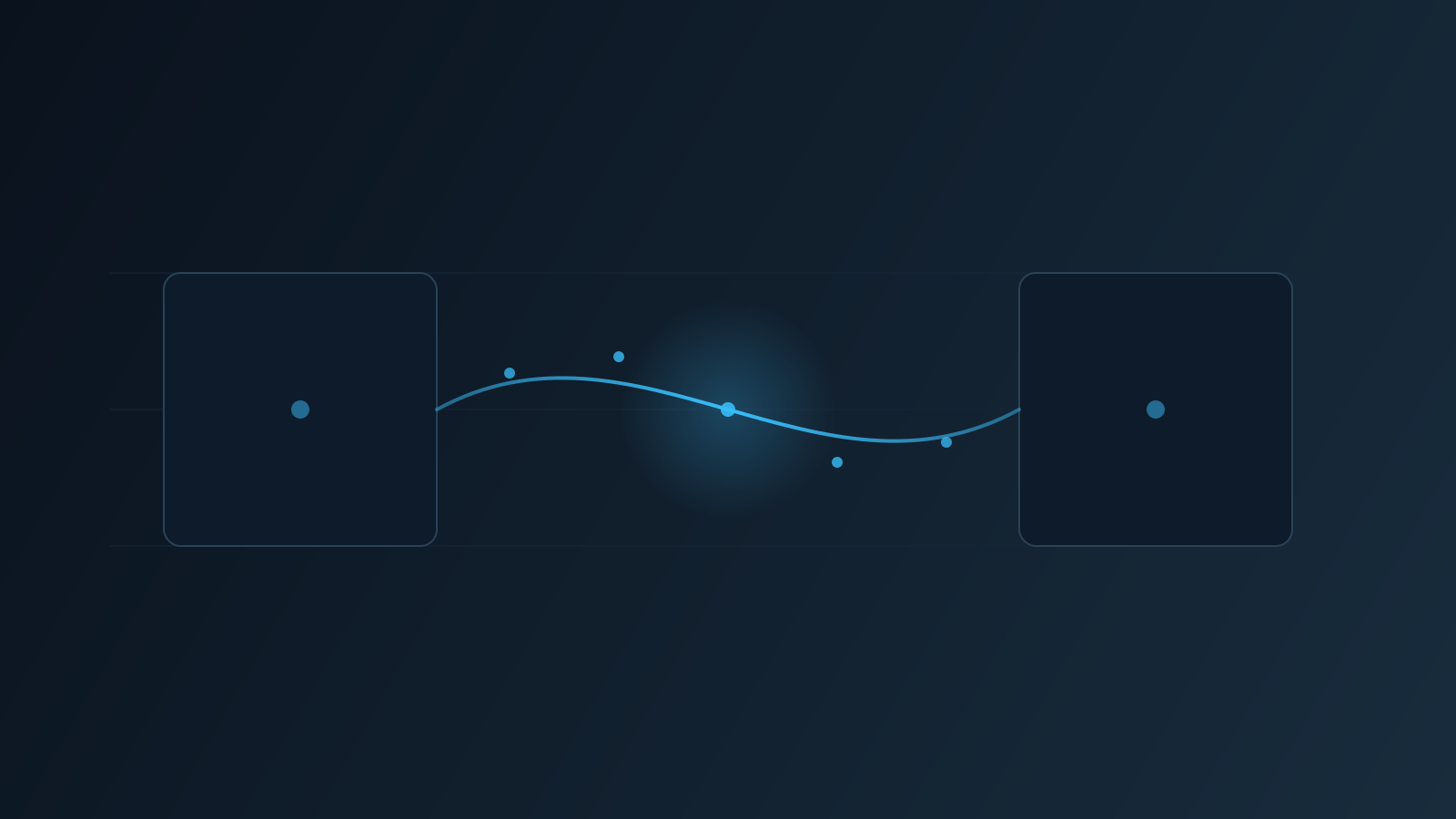
In a June 10 account, GALLO — the world's largest wine producer by volume, a private company with more than 7,000 employees — described layering an agentic decision-intelligence platform from Aera Technology on top of its existing ERP and roughly 400 "boundary" systems. Nitin Murali, the company's vice president of supply chain excellence, framed the problem not as a software shortage but as a "signal deficit": "We have so much software, but we don't have enough signals to use to make decisions." Rather than rip and replace, the agents sit above the stack so that a single event — an inbound shipment delay, say — fans out into different prompts for different teams: a supplier conversation for procurement, a pattern flag for sourcing, a line-reschedule warning for production.
Operators will recognize the shape of this. Most planning and warehouse teams do not lack systems; they lack a layer that reconciles those systems fast enough to change a decision before the window closes. Gallo's diagnosis — "value was sitting in the boundaries between silos" — is the right one, and the architecture choice is the part to underline: the agents are an orchestration layer over the systems of record, not a replacement for them. That keeps the systems you already trust in place while adding the cross-silo routing that used to live in someone's head or inbox. What stays customer-owned is exactly that routing logic — which event becomes whose signal, and what "urgent" means for each team. It is worth keeping tunable, because a vendor's default escalation rules rarely match how your floor actually triages, and the moment they diverge, the "decision intelligence" starts making confident calls about a business it doesn't quite run.