
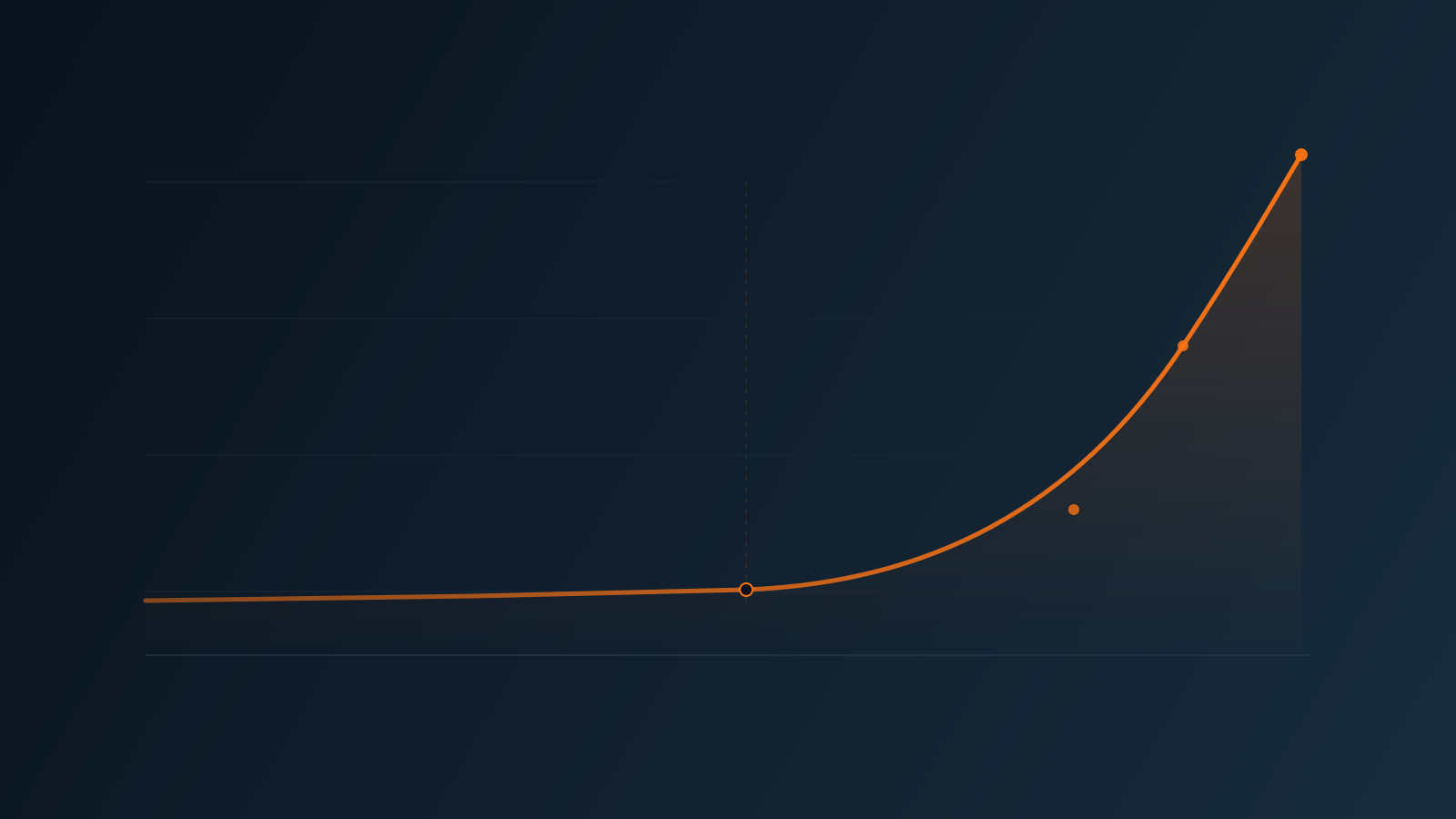
In a recent diginomica interview, Celonis Field CTO Manuel Haug laid out three stages of enterprise AI adoption: copilot-style question-and-answer, human-in-the-loop (where he says many Celonis customers operate today), and "human on the loop" — agents acting with near-autonomy across a defined scope while people orchestrate rather than approve each individual step. The jump from the second stage to the third, he says, is where the cost curve changes shape: an "almost exponential" rise as one agent becomes three and three becomes ten, "sometimes within days." His framing for buyers is blunt — token-based pricing "is much closer to compute resource than to a seat," closer to an AWS bill than a SaaS license, and some organizations are already rationing daily token credits to employees.
This is the conversation operators should have before, not after, scaling agents. Seat-based software taught a generation of buyers to budget AI as a flat line; consumption-priced agents behave like infrastructure, and the flywheel that makes them productive is the same flywheel that makes them expensive. The discipline that keeps it sane is the unglamorous kind that warehouse and planning teams already practice on every other resource: meter usage per workflow, tie spend to a decision that actually changed an outcome, and reserve frontier-model calls for the high-ambiguity steps while leaving lighter or deterministic logic to handle the high-volume, low-judgment ones. What stays customer-owned is the call about which decisions are worth autonomy — and which are cheaper, faster, and safer left as a rule. Autonomy is a cost center as much as a capability; treat it like one and the flywheel works for the budget instead of against it.